Clinical Canine Massage

Canine Massage Guild Member
Professional qualifications. Evidence-based practice.
Clinical Canine Massage Therapy Level 5 Diploma.
Awarded following a two-year clinical training programme with the Canine Massage Therapy Centre.
Over 8 years' experience in canine rehabilitation
Canine Massage Guild member.
Professional, fully trained, assessed, insured, accountable.
I p
Professional qualifications. Evidence-based practice.
Clinical Canine Massage Therapy Level 5 Diploma.
Awarded following a two-year clinical training programme with the Canine Massage Therapy Centre.
Over 8 years' experience in canine rehabilitation
Canine Massage Guild member.
Professional, fully trained, assessed, insured, accountable.
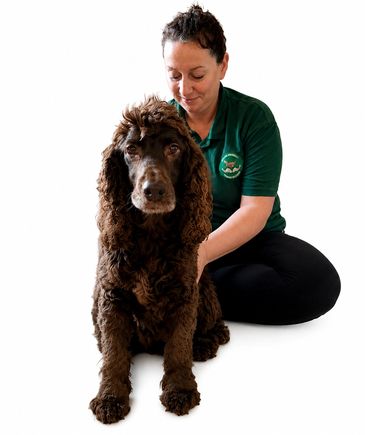
I provide evidence-based clinical canine massage to support dogs experiencing pain, injury and mobility issues.
My additional qualifications as a canine behaviourist complement my clinical canine massage work.
By understanding canine body language and recognising subtle behavioural changes, I can adapt each treatment to your dog's individual needs, helping them feel safe and supported throughout the session.
Clinical Canine Massage
This is not just massage.
This is specialised treatment.
The Lenton Method® is not generic massage. It is a structured clinical system.
It is the only method of canine massage built on clinical evidence, published in the Vet Record.
Clinical Canine Massage can help with:
- Musculoskeletal pain
- Intermittent lameness
- Chronic pain management
- Pre and
This is not just massage.
This is specialised treatment.
The Lenton Method® is not generic massage. It is a structured clinical system.
It is the only method of canine massage built on clinical evidence, published in the Vet Record.
Clinical Canine Massage can help with:
- Musculoskeletal pain
- Intermittent lameness
- Chronic pain management
- Pre and post-operative support
- Mobility support for neurological cases
- Sporting or performance dogs
- Pain-based behaviour change
A structured three-tiered clinical system:
- Advanced Palpation
A skilled level of palpation used to detect trigger points, fascial restrictions and muscle fibre damage. Assessing soft tissue and enabling targeted treatment.
- Bodymapping
A systematic way to map injuries across the body, identifying compensation chains and patterns. This is a focused muscle level mapping tool.
- Myofascial Releases
7 direct neuromyofascial release protocols, plus 60 other techniques across 4 massage disciplines.
The Evidence Base
Independent clinical research conducted by the University of Winchester into the efficacy of Clinical Canine Massage, specifically the Lenton Method®, found that in a study of 527 dogs, 95.3% showed a positive response to treatment within 1–3 sessions.

Treatment Sessions
Treatment Sessions
Structured approach. Individual care.
Clinical Canine Massage is usually carried out as one session a week for three weeks.
Soft tissue and myofascial issues can be held within the body for months or even years.
The course of three sessions not only allows your dog to become accustomed to treatment but, as tissue yield occurs within the musc
Structured approach. Individual care.
Clinical Canine Massage is usually carried out as one session a week for three weeks.
Soft tissue and myofascial issues can be held within the body for months or even years.
The course of three sessions not only allows your dog to become accustomed to treatment but, as tissue yield occurs within the muscles and fascia, progressive assessment enables underlying dysfunction to be identified and treated.
The sessions are spaced to allow the body time to respond and begin the healing process.
After the initial course, any further treatment is discussed with you based on your dog's individual progress and ongoing needs
Common post-treatment outcomes:
- Improved mobility, posture, gait and range of movement
- Return to / improved normal exercise and performance
- Improved motor output – reduced or resolved musculoskeletal pain, e.g., lameness, stiffness, reluctant to go for walks
- Improved sensory input – more settled, more willing to be handled, petted, groomed and examined
- Quicker post-operative recovery, offloading and overcompensation patterns addressed
- Chronic pain management for orthopaedic conditions, e.g., arthiritis, hip dysplasia, elbow dysplasia, luxating patella
Designed to sit alongside veterinary diagnosis
Built to integrate with veterinary diagnosis and the wider care plan, not to replace it.